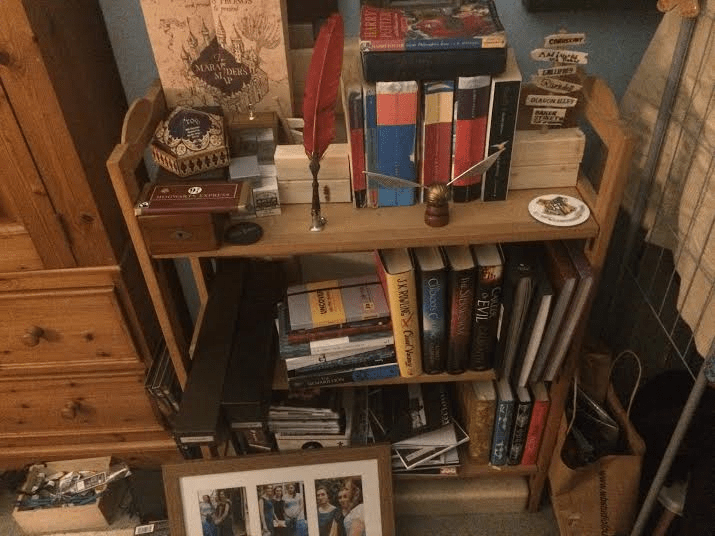
For someone who studied English Literature at university, I am a very slow reader. It didn’t take me long to realise I would never keep up. By my second second year (I did the year twice), I only read the books I would be writing essays on, and I’ll admit there were a couple of those that I never managed to finish. Last year I read about 15 times that books I read the previous year, but that’s only because in the whole of 2022 I think I only managed to start and finish one book.
However, that doesn’t mean books aren’t important to me. Below is a list of some of the books that have had the biggest impact on me. It’s not an exhaustive list or even an all time top ten. There are other books on more sensitive topics that I’m happy to share or might one day create a blog post for too. But each of these books has made a difference in my life, and I thought I’d share, for each of them, what that impact was.

Harry Potter, J.K. Rowling
Those who know me well, or even a little, won’t be surprised that Harry Potter has made this list. You may be more surprised to know that I didn’t read the full series until after seeing Deathly Hallows, Part Two. Since then I think I’ve read the full series about seven times.
Throughout my struggle with depression, Harry Potter has been a comfort and a light for me. In the darkness that mental illness cast around me, this was a story that spoke of light, of the triumph of good over evil. It is a story that has provided me with a needed escape from my own mind, a door into a world in which there is adventure, community, belonging and hope. A story that points me to something bigger than myself, to a greater cause, to life beyond death, to the end of suffering.
Those who know me may also know that I wrote my dissertation on Harry Potter and the narrative on the Bible, on how we see in the series a world that is broken, a triumph of good over evil, the reality of life beyond death, and the loving sacrifice of a number of characters, including Harry Potter himself.

Head Heart Hands, Linda Allcock
Ok, I admit I might be a little biased with this one, but no one said I couldn’t be, and this little series of three books has made a big difference to me. This series played a big role for me in learning to study and understand the Bible, and how to let what I read change my heart and transform how I live. Sometimes it can be hard to understand something that the Bible says, but in the words of Head Heart Hands‘ subheading, this series helps us to learn how to “unpack biblical truths in a way that impacts our hearts and changes our lives’ and to read the Bible for ourselves.“
The trio of books take the reader through the whole of the gospel of Matthew, introducing us to the person of Jesus. Its several years since I first read through Head Heart Hands and I am thankful for how it helped me to understand more of how near and compassionate and caring God is:
“We see powerlessness as a problem but Jesus sees it as our identity! We are supposed to be powerless! We are children. The power lies with our Father, not with ourselves. What a relief that is when I can’t do something, when I’m overwhelmed, when life seems too hard, when I’m scared. Children are supposed to feel like this. Your heavenly Father knows.”
The Head Heart Hands series is great for teenagers and adults alike, they are great to go through on your own or with others, and they are easy to engage with and beautifully illustrated too. Linda’s more recent book, Deeper Still, is also really great, as is her blog, also named ‘Head Heart Hands’.
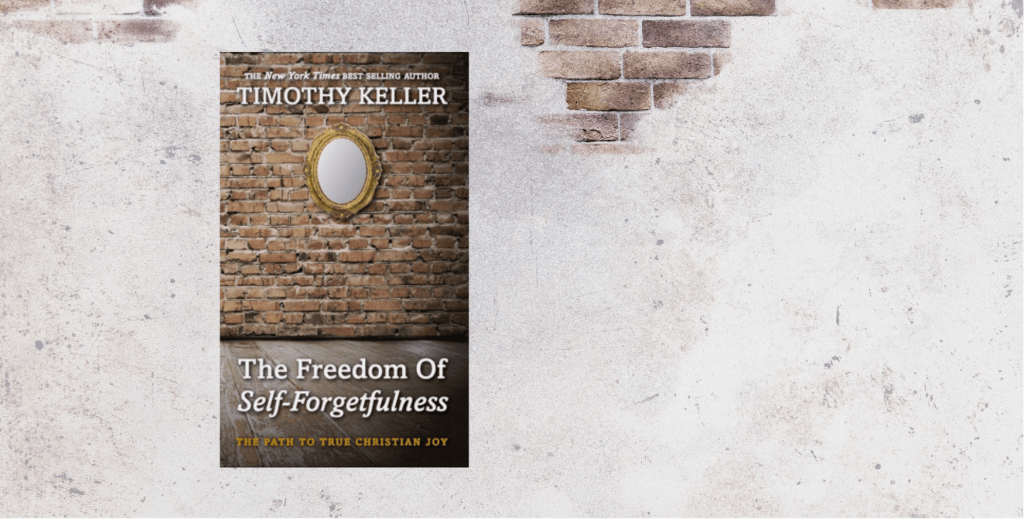
The Freedom of Self Forgetfulness, Timothy Keller
Before reading this book, I had thought that being a self-focused person was the same as being a self-loving person. The phrase ‘self-focused’ would bring to mind the image of a person with a great deal of pride, boasting of themselves and praising their own achievements.
When my depression is at its worst, I have found myself spiralling into the self-hateful thoughts that my depression had been triggered by and that my depression was making worse. In my warped reasoning, I had come to see the self-hatred I saw in myself as a form of humility. I loved others more than myself, surely that was humility?
In The Freedom of Self Forgetfulness Timothy Keller talks about true humility, humility that is seen in Jesus, the person at the centre of the Christian gospel:
A truly gospel-humble person is not a self hating person or a self loving person but a… self forgetful person, whose ego is just like his or her toes.
I realised that in my self hatred, I wasn’t becoming more humble, looking outward to how I could serve others, I was becoming more self-focused, preoccupied by my own needs and feelings, rather than the needs of those around me. Timothy Keller challenged this with something so completely different:
True gospel-humility means stop connecting every experience, every conversation, with myself. In fact, I stop thinking about myself. The freedom of self-forgetfulness.
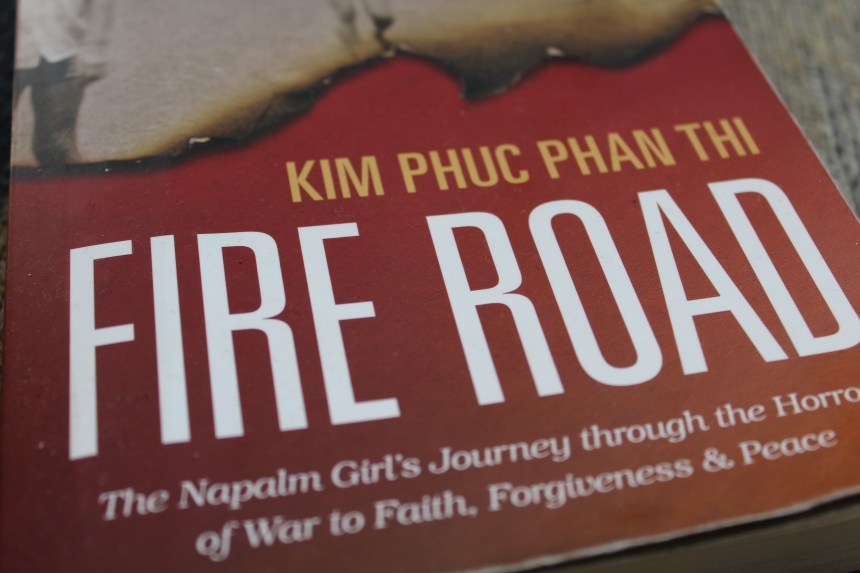
Fire Road, Kim Phuc Phan Thi
This book taught me something of what it looks like to forgive. Kim Phúc, informally known as “the Napalm Girl,” was made particularly famous as a badly burned child running from a bombing in one of the most horrifying, iconic images of the Vietnam war.
The wrongs that I’ve faced are minor compared to what Kim Phúc has experienced. She faced many injustices, she had many to forgive and much to forgive them for. And yet, as I read through her autobiography, I was amazed at how she described the way that God had worked in her to give her the power to forgive those who brought her so much pain. We see in her writing the freedom that comes with forgiveness.
The decision to pick back up my pain was never worth it. Forgiveness is always the better path…
Another thing that really struck me as I read this books was the constant joy that was evident in Kim Phúc’s writing, even as she looked back on years and times of severe suffering and horrible pain. Both in physical agony and deep depression, Kim looks back and sees God at work. Right in the heart of pain she continues to look to God and find joy in his promises.
If this Jesus was indeed who he said he was, and if he had truly endured all he said he had endured, then perhaps he could help me make sense of my pain and at last come to terms with my scars.
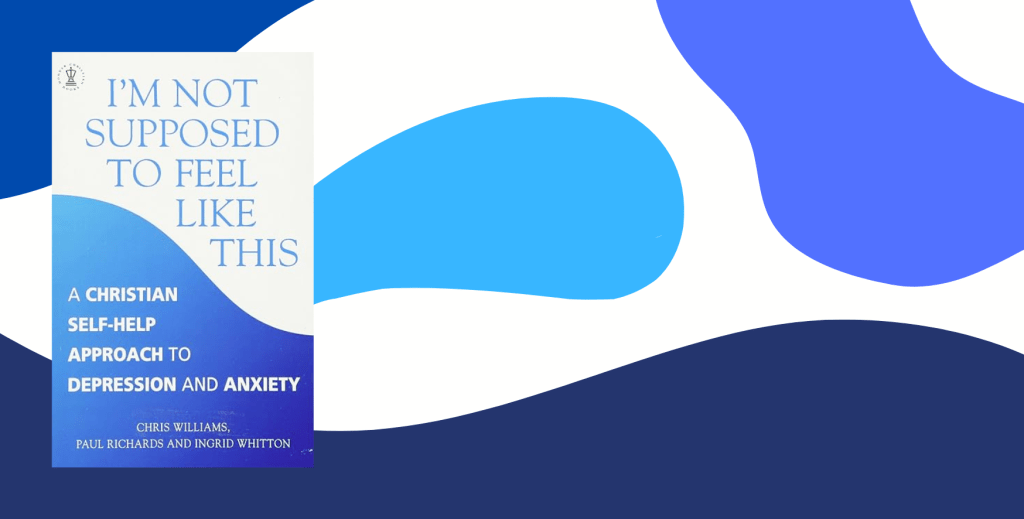
I’m Not Supposed to Feel Like This, Chris Williams, Paul Richards and Ingrid Whitton
There have been a number of times when my depression has been particularly bad, and in one of my earlier episodes I was particularly grappling with the idea that ‘I shouldn’t feel like this’, my life wasn’t bad, and as a Christian I had hope in the face of hopelessness, and God’s comfort in the face of distress.
And so on top of what I was already experiencing, I started to feel an extra weight of guilt. But through the wise words of good friends, and through books like this, I was unable to unmask this guilt as a false guilt, and to push back at ongoing stigma around mental illness.
This book helped me to see that am not alone in my depression and that I really am allowed to feel like this. Today it baffles me that some Christian communities don’t understand mental health, when the Bible is so full of words that give voice to the experience of depression, anxiety, suicidality and trauma.
I’m Not Supposed to Feel Like This is a sort of cross between a workbook and a Bible study, and uses strategies from Cognitive Behavioural Therapy with a Christian viewpoint. It’s really helpful and practical and you can go through it whatever speed you can manage and even in whatever order you find most useful.
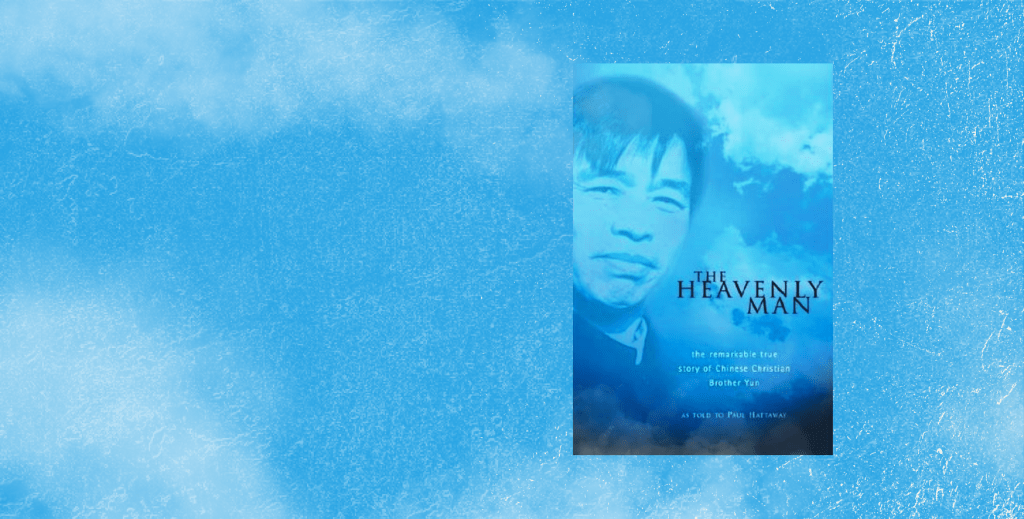
The Heavenly Man, Brother Yun
The Heavenly Man is another autobiography that left me amazed and in awe. Before I became a Christian, I was a pretty sceptical person, and I’ll admit that even as I read this book, it felt as though my instinct was to doubt that what Brother Yun said was true. As he clearly describes God’s miraculous work, and others confirm what he shares to be true, I felt challenged to let go of my sceptical tendency and recognise that God can and does work today in ways that are beyond my logic or understanding.
So much was impossible ‘What happened next is not possible from a human perspective, yet God is my witness that what I about to tell you is the truth...
From the unexpected narrative of how he received his first Bible to the amazing story of how he walked out of the prison in which he was being held for sharing Jesus, it is amazing to read of the seemingly unexplainable events take place.
Interestingly, the investigation concluded that Yun had received no human help from any of the prisoners or guards during his escape. I testify that this is entirely true. It was all at the hands of our Almighty God.
As well as being witness of God’s miraculous work, Brother Yun faced a great deal of suffering. And yet the focus of this story is on God, on his goodness and his glory. He regularly speaks of doing what he does in God’s name and in God’s power, referencing the words of Galatians 2:20: “It is no longer I who live, but Christ who lives in me.” The same can be said of his wife Deling, whose contributions are included throughout the book.
When we arrive at the end of our own strength it is not defeat, but the start of tapping into God’s boundless resources. It is when we are weak that we are strong in God.

Hope in an Anxious World, Helen Thorne
Anxiety is not new to me and I’ve heard and read quite a lot on the subject, so I was a little slow to read this book as I guess I didn’t think I had a lot to learn. But I’m very glad I did.
This book looks in turn at some of anxiety’s lies, and explores what God says in response.
It’s always refreshing to hear your own experiences reflected in the text on the page in front of you. I’ve read three of Helen Thorne’s books and I would say the same is true of each of them. I found this particularly relatable:
“If you are anything like me, you can convince yourself that you are alone in your pain – that noone will ever truly understand the depths of the sorrow and the fears that you bear. But it’s a lie. Like me, maybe you sometimes sit paralysed on your bed, utterly persuaded that your life is spiralling out of control… In your anxiety, do you hear the accusation that you are too weak, too exhausted, to engage with anything or any one around?… You’re too broken, too worthless for anyone to want to get alongside you and enable you to change. But nothing could be further from the truth. God wants us to know something better than these lies.”
Hope in an Anxious World helps us to see that, even toughest of days, we are loved, we are secure, we are being led, equipped and transformed, and we have a hope that cannot be taken away. Perhaps one of the biggest impacts this book had on me was helping me to see the simple but transformative reality that God will provide what I need when I need it.
Trouble is, anxiety encourages us to look a long way ahead. We panic because we don’t have what we need to be able to get through next week’s job interview, next month’s operation, next year’s exam or some hypothetical crisis in the future. To which God says, No you don’t – not yet – but you will when you get there. I’ll give you what you need to live life in ways that honour me, at the time I know to be best. And you can trust me to keep that promise.
With anxiety it’s easy to be overwhelmed by something today, something tomorrow, something next week and something next month, even all at once. I pray, asking for peace in the hope that God would give me everything I need the moment that I ask. But if he did, how quick would I be to start relying on myself again? Instead, God often provides what we need one day at a time, even hours or minutes at time. He calls us not to worry about tomorrow because he will provide what we need for tomorrow tomorrow.

The Case for Christ – Lee Strobel
This is one of those many books that I’ve been meaning to read for a very long time, and I’m glad that I finally did. When I started this book, it wasn’t as though I was looking for proof of the Christian faith. I didn’t need more proof, I already had the proof I needed and I already believed, but it was exciting and encouraging to read about so much evidence that Christ, the Son of God, lived, died and rose again.
Lee Strobel, a journalist for Chicago Tribune began looking into Christianity after his wife became a Christian, but before he began he was very sceptical. He says: “As far as I was concerned, the case was closed. There was enough proof for me to rest easy with the conclusion that the divinity of Jesus was nothing more than the fanciful invention of superstitious people. Or so I thought.”
Some have described faith as something that they wished they had, or something that trusts where evidence is lacking. But the reality is that the Christian faith isn’t founded on nothing, but on real events in real history.
Christians believe that as wonderful as Jesus’ life and teachings and miracles were, they were meaningless if it were not historically factual that Christ died and was raised from the dead and that this provided atonement, or forgiveness, of the sins of humanity.
The evidence for the life, death and resurrection of Jesus is often assumed to be lacking. Before I became a Christian I didn’t think there was any. But there is evidence, far more than many historical events that we take for granted. As Lee Strobel says: “Historians usually operate with the burden of proof on the historian to prove falsity or unreliability, since people are generally not compulsive liars. Without that assumption we’d know very little about ancient history.”
The Case for Christ explores different areas of evidence in depth as the author repeats the journey he took when he looked into the Christian faith, interviewing some of the top Biblical, historical, archaeological, medical, even psychological scholars. I folded over the corner of many pages as I read The Case for Christ, and I could present you with an abundance of thought-provoking arguments and items of evidence, but then I may as well just give you the book, and I would be very happy to if you are interested. But for now here is just one thought I would encourage you to reflect on:
“The apostles (the disciples – those who knew Jesus) were willing to die for something they had seen with their own eyes and touched with their own hands. They were in a unique position not to just believe Jesus rose from the dead but to know for sure. And when you’ve got eleven credible people with no ulterior motives, with nothing to gain and a lot to lose, who all agree they observed something with their own eyes—now you’ve got some difficulty explaining that away… People will die for their religious beliefs if they sincerely believe they’re true, but people won’t die for their religious beliefs if they know their beliefs are false.”
This book encouraged me that there is even more evidence than I thought for the life, death and resurrection of Christ. My faith is not without substance, it is founded on evidence, and yet it is so much more than that. As one scholar in the book shared:
I believe in Jesus on the basis of the historical evidence, but my relationship with Jesus goes way beyond the evidence. I have to put my trust in him and walk with him on a daily basis.


Little Book of Chaos, Lifewords
Ok, I confess that part of my job is to raise awareness about Lifewords’ projects and resources, but it’s not often that I use my own blog to talk about work, and Little Book of Chaos is too good not to mention here.
Little Book of Chaos is unsurprisingly a little 10x10cm book which features Bible verses and real life quotes from young adults who have experienced mental health difficulties.
When my thoughts are trying to tell me that there is no hope, that I am alone, unloved, a burden, this Little Book points me to Bible truths that say otherwise, that remind me that there is hope, that I am loved, that I am not alone in this fight.
I’m grateful for this Little Book of Chaos, for the words inside that voice the mental storm, the words that remind me of comfort and hope. I’m grateful for something tangible that I can hold in my pocket, that I can put in my ‘crisis box’, keep by my computer, that I can write about at work. I’m grateful that in the depth of the chaos, God never lets go of me, and he makes sure that I never let go of faith.

The Bible
If you know me then I hope it also won’t surprise you that the book that has made the most difference in my life is of course the Bible. Whilst other books have shaped me, the Bible alone has brought a complete transformation. And that’s because the Bible is more than a book of wisdom or a powerful story. It is the means by which I came to know the one in whom true hope is found.
In immensely difficult moments, I have found words of comfort, encouragement and peace. I have been challenged, moulded and changed by the words of the Bible. I have found the words that voice what I am feeling when I don’t have words of my own, and I have known again and again that I am not alone.
It is through the words of the Bible that I came to know Jesus, found forgiveness for my sin and placed my trust in my saviour. And it through the words of the Bible that I know the joy and certain hope of eternal life in him.


